
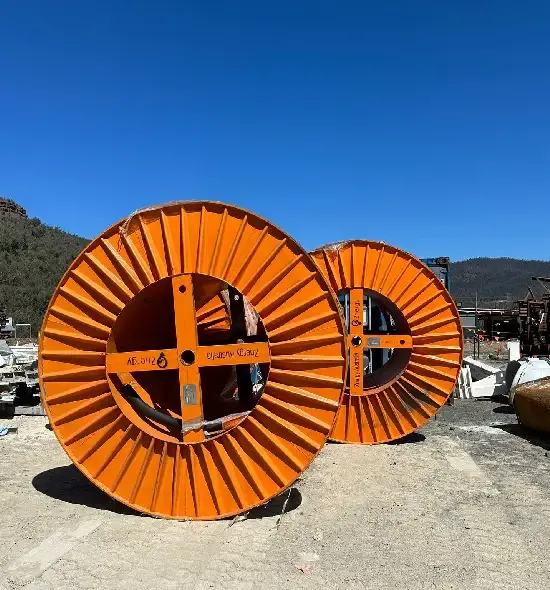
The selection of industrial cables may appear to be a minor choice, yet it establishes essential standards for equipment safety, operational efficiency, and reduced future maintenance expenses. The selection of an incorrect cable results in repeated equipment breakdowns, which cause operational interruptions and create unsafe conditions. The selection of an appropriate cable enables organizations to maintain their systems while achieving long-term equipment reliability and operational security.
Let’s break it down in a simple, practical way with the help of cable manufacturers so you can make the right decision without feeling overwhelmed.
1. Understand the Application First
Before you start examining different Australian cable types, you should first determine your specific requirements for cable usage. Every industrial setup is different; some involve heavy machinery, and others deal with automation systems or outdoor installations.
The first step requires you to identify whether the cable will function as a power transmission system, data transmission system, or control system. You must also determine whether the object will remain fixed in one location or travel continuously between different spots. The process of establishing basic requirements enables you to make subsequent decisions throughout the entire project.
Industries often have tough working conditions, and wires must be able to withstand such extreme settings. Factors like temperature, humidity, chemical substances, dust levels, and sunlight exposure affect the choice of cables.
If your environment features very high temperatures, then you should go for heat-resistant cables. For cables that are to be laid outdoors or underground, they should be weatherproof and waterproof. In a chemical-rich environment, the cable insulation has to be able to resist corrosion. Lack of consideration of these factors will simply result in premature failure of the cables.
The cable's electrical property depends mostly on the material of the wires inside the cable. The main metals used for conductors in industrial cables are copper and aluminum.
Copper offers very good electrical conductivity, flexibility, and mechanical strength. This is why it is widely used in the industry. On the other hand, aluminum is light in weight and a cheaper option, although it is a bit less conductive. When making a decision, you should consider what you can afford, the nature of your application, and what level of efficiency you need.
First and foremost, insulation stops a cable from getting damaged by outside elements while also preventing the escape of electric current. Different types of materials are tailored for different kinds of environments.
Generally, PVC insulated cables are cheap and easily available but they cannot withstand extreme conditions. On the other hand, XLPE (cross-linked polyethylene) is not only more resistant to high temperatures but also has an extended life span. Rubber insulated cables, however, are perfect for environments where the cable continuously bends or moves. So, it would be best if you pick the correct insulation, as it will not only guarantee safety but will also extend the life of your cables.
Every cable comes with a voltage rating that specifies the maximum voltage it can safely carry. It is dangerous and potentially fatal to use a cable for a higher voltage than it is rated for.
It's always a good rule to get a cable that is either rated for the voltage of your system or is capable of carrying a slightly higher voltage. This not only ensures your safety but also that you do not put excess strain on the cable, which can affect its performance.
How much current a cable is able to safely carry without becoming too hot is very important. This capability is determined by the size of the conductor and the type of material used.
In the event you use a cable that is too small in size, it will become excessively hot and eventually give out. If, however, you choose one that is too big, you will unnecessarily spend more. That is why determining your load requirements precisely will help you find the right size.
What works for bending or moving cables. In fact, cables that are permanently fixed or installed in place areas do not require flexibility at all.
When the cables need to be flexed continually, they should be specially made to withstand the strain of repeated bending. Rigid cables are sufficient for applications where the cables are not moved. The incorrect choice may result in them wearing out quickly.
Industrial zones are normally quite noisy electrically because of all the machines and other electrical appliances running. This could be a problem for the types of cables that transmit data or control signals.
Basically, shielded cables mitigate the effects of interference by providing a barrier and therefore the performance remains stable. If you are working with sensitive electronic devices or communication systems, then it is quite clear that shielding is something that you must have even if the equipment is costly.
9. Work with Trusted Suppliers
The source of your cable matters just as much as the cable itself.
Trusted suppliers offer stable product quality together with accurate documentation and their dependable customer service. They can also guide you in selecting the right cable based on your specific needs. Building a relationship with a good supplier can make your job much easier.
Final Thoughts: Making the Right Choice Matters
The selection of industrial cables requires more than technical knowledge because this choice impacts safety and operational efficiency and equipment sustainability. The process becomes easier to follow when you take the time to comprehend your application needs and environmental conditions and project specifications.
The process of selecting cables should not be viewed as an urgent task but rather as a commitment to enhance your system's operational dependability. The correct cable will operate silently for multiple years while delivering reliable performance, whereas the incorrect cable will require ongoing maintenance.
The selection process requires more than selecting the highest-priced option or the most sophisticated cable. When you get that right, everything else falls into place smoothly.
Znergy is an Australian-based cable engineering and manufacturing group supplying power cable solutions to mining, infrastructure, and industrial markets
© 2026 All Rights Reserved by Znergy Cable | Designed By FODUU